

Leadership is changing. Not because leadership itself has become less important — quite the opposite. Leadership has become more important than ever. The difference is that the role of leadership is evolving.
Many of the assumptions that shaped leadership over the past century are being challenged by the realities of today's workplace. The leader is no longer expected to be the smartest person in the room. The leader is no longer expected to possess all the answers. The leader is no longer expected to personally drive every decision.
Today's organizations require something different. They require leaders who create momentum.
A Childhood Image with a Leadership Lesson
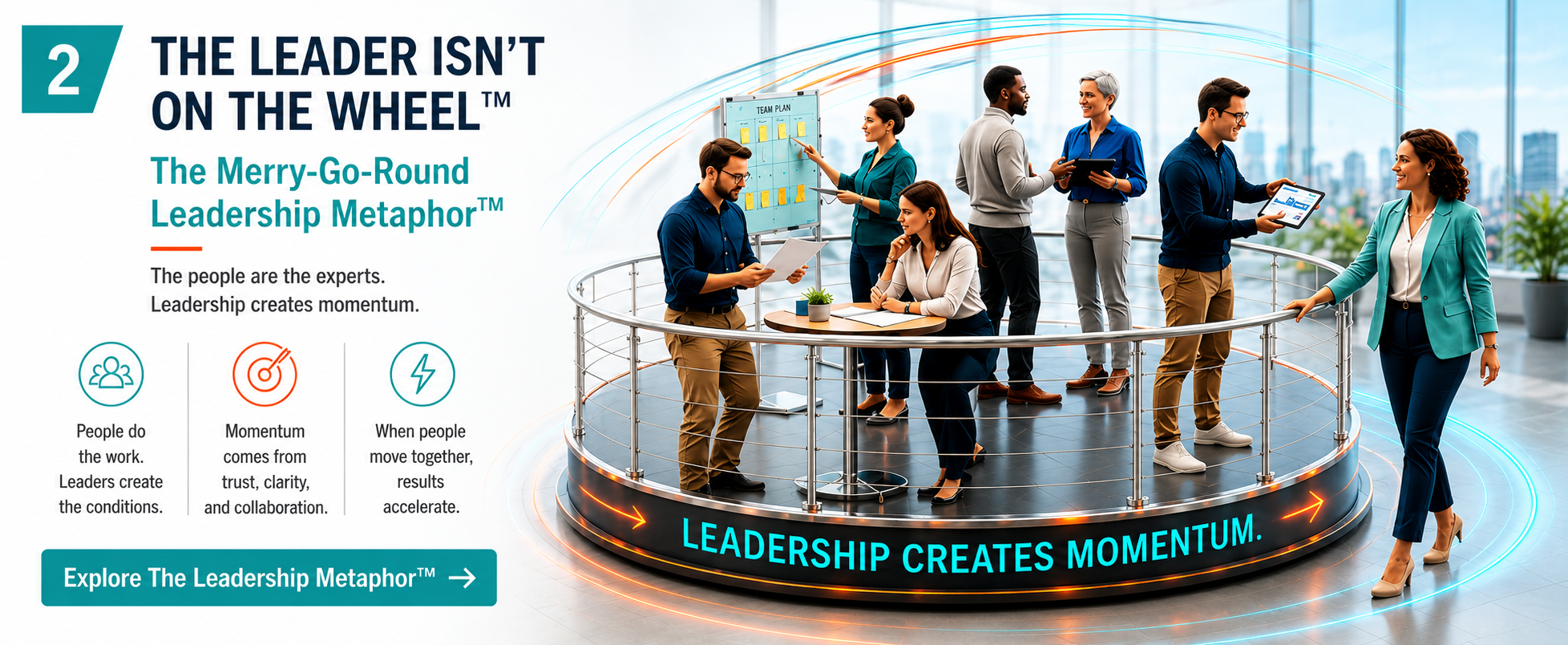
Think back to an old playground merry-go-round. Many of us remember standing on those metal structures while someone pushed from the outside. The people on the wheel were moving. The person outside the wheel helped create momentum.
As children, we probably never thought much about it. As a leadership metaphor, however, it is surprisingly powerful.
The people on the wheel are doing the work. The leader is helping create movement. The leader isn't on the wheel. The leader helps the wheel move.
The Expert Has Changed
Historically, leaders were often promoted because they possessed expertise. The assumption was simple: the person who knew the most became the leader. The leader directed. The team executed. That model made sense in environments where leaders often possessed more knowledge and experience than those around them.
Today's workplace is different. Organizations are increasingly populated by specialists — engineers, analysts, scientists, project managers, technology experts, financial experts, operations experts, customer experience experts. In many situations, the people closest to the work possess deeper expertise than the leader.
That reality changes the role of leadership.
Leadership Is Becoming More Human
One of the most encouraging leadership trends of the past decade is the growing recognition that leadership is fundamentally about people. People want more than instructions. They want:
- Growth
- Purpose
- Connection
- Contribution
- Meaningful work
They want leaders who see them as people rather than resources. This does not mean organizations should become less focused on performance. It means performance increasingly depends on how effectively leaders engage the people responsible for delivering it.
The ability to connect with people has become a leadership capability. Not a soft skill. A business skill.
The People Are the Experts
This may be the most important idea in the entire metaphor. The people are the experts. That does not diminish leadership — it elevates it. Because the leader's value no longer comes primarily from having answers. The leader's value comes from helping others contribute their expertise more effectively.
That means:
- Creating clarity
- Aligning effort
- Removing obstacles
- Building confidence
- Encouraging collaboration
- Supporting accountability
- Creating momentum
The leader becomes the catalyst. Not the bottleneck.
What Momentum Looks Like
Momentum is often misunderstood. Many leaders assume momentum means working harder, moving faster, increasing pressure, demanding more. True momentum looks different.
Momentum develops when:
- People understand where they are headed
- People understand why it matters
- People feel ownership
- People believe they can succeed
- People have support
- People are encouraged to contribute
Momentum is not something leaders push onto people. Momentum is something leaders help create. Once momentum develops, results often follow.
Why Many Leaders Struggle
Many leaders were taught to lead in a different era — an era where direction was valued, control was rewarded, expertise was leadership, and compliance was expected. Those approaches are becoming less effective in environments that require innovation, adaptability, and engagement.
Leaders often find themselves caught between two worlds. They know people need more ownership, more accountability, more opportunity to think. But they are not always sure how to create it.
That challenge leads directly to the next question: if leadership creates momentum, what specifically must leaders do differently?
Five Shifts. One New Way to Lead.
The Merry-Go-Round Leadership Metaphor™ changes how we think about leadership. The Five Leadership Shifts™ explain how leaders bring that mindset to life. They help leaders move:
- From Directing to Developing
- From Telling to Asking
- From Controlling to Enabling
- From Managing Work to Growing People
- From Driving Results to Creating Momentum
Together, these shifts help leaders create the conditions where people can think, contribute, grow, and succeed. And that is where momentum begins.
Final Thought
Leadership is no longer about carrying the organization. Leadership is about helping the organization move. The people are the experts. Leadership creates momentum. The leader isn't on the wheel. The leader helps the wheel move.
Continue the Journey
Explore The Five Leadership Shifts™ and discover the practical behaviors that help leaders create momentum, develop capability, and achieve sustainable results.
Five Shifts. One New Way to Lead. → View Full Framework